

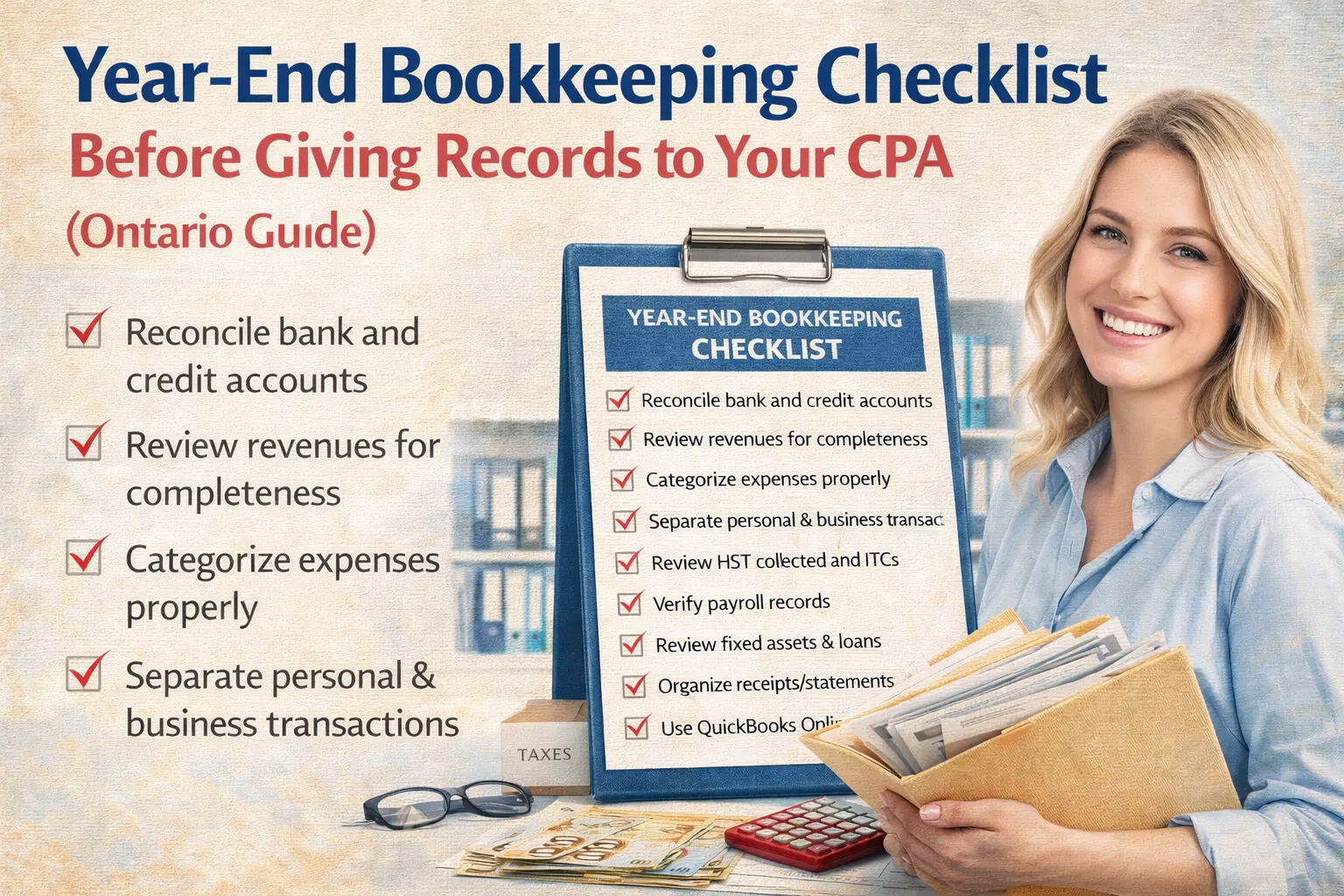
Year-end bookkeeping is one of the most important steps Ontario businesses must complete before tax season. Incomplete or disorganized records can lead to higher accounting fees, CRA delays, missed deductions, and audit risk.
This year-end bookkeeping checklist for Ontario businesses outlines exactly what to prepare before handing records to your CPA, ensuring a smooth, accurate, and cost-effective year-end process.
Why Year-End Bookkeeping Matters for Ontario Businesses
Proper year-end bookkeeping helps Ontario business owners:
Clean books mean your CPA can focus on tax planning, not corrections.
Year-End Bookkeeping Checklist (Ontario Businesses)
1. Reconcile All Bank and Credit Card Accounts
Ensure:
Unreconciled accounts are a top CRA audit red flag.
2. Review Income for Completeness
Confirm:
Ontario businesses are frequently audited for underreported income.
3. Categorize Expenses Correctly
Verify that expenses are:
Common misclassified expenses include meals, vehicle costs, and home office expenses.
4. Separate Personal and Business Transactions
Before year-end:
CRA closely reviews owner-managed businesses for this issue.
5. Review HST (Ontario – 13%)
Confirm:
Errors in HST are one of the most common CRA reassessment triggers.
6. Verify Payroll Records (If Applicable)
Ensure:
Payroll errors can result in penalties and interest.
7. Review Fixed Assets & Depreciation
Prepare:
Your CPA will determine Capital Cost Allowance (CCA).
8. Check Loan Balances and Shareholder Accounts
Confirm:
Incorrect shareholder balances can result in taxable benefits.
9. Prepare Supporting Documents for Your CPA
Provide:
Complete documentation saves time and money.
10. Use CRA-Compliant Bookkeeping Software
Using software like QuickBooks Online ensures:
Most Ontario CPA firms prefer QBO for year-end work.
Common Year-End Bookkeeping Mistakes in Ontario
Avoiding these mistakes reduces stress and costs.
How a CPA Helps at Year-End
An Ontario CPA will:
Frequently Asked Questions (FAQs)
When should Ontario businesses complete year-end bookkeeping?
Ideally immediately after fiscal year-end, before submitting records to your CPA.
Do I need perfect books before giving them to my CPA?
No, but the more complete and accurate your books are, the lower your accounting fees will be.
Is year-end bookkeeping required for sole proprietors?
Yes. Sole proprietors must prepare accurate books before filing their T1 return.
Can QuickBooks Online be used for year-end bookkeeping?
Yes. It is the most commonly used bookkeeping software among Ontario CPAs.
What happens if books are not ready?
Delays, higher CPA fees, missed deductions, and increased CRA audit risk.