

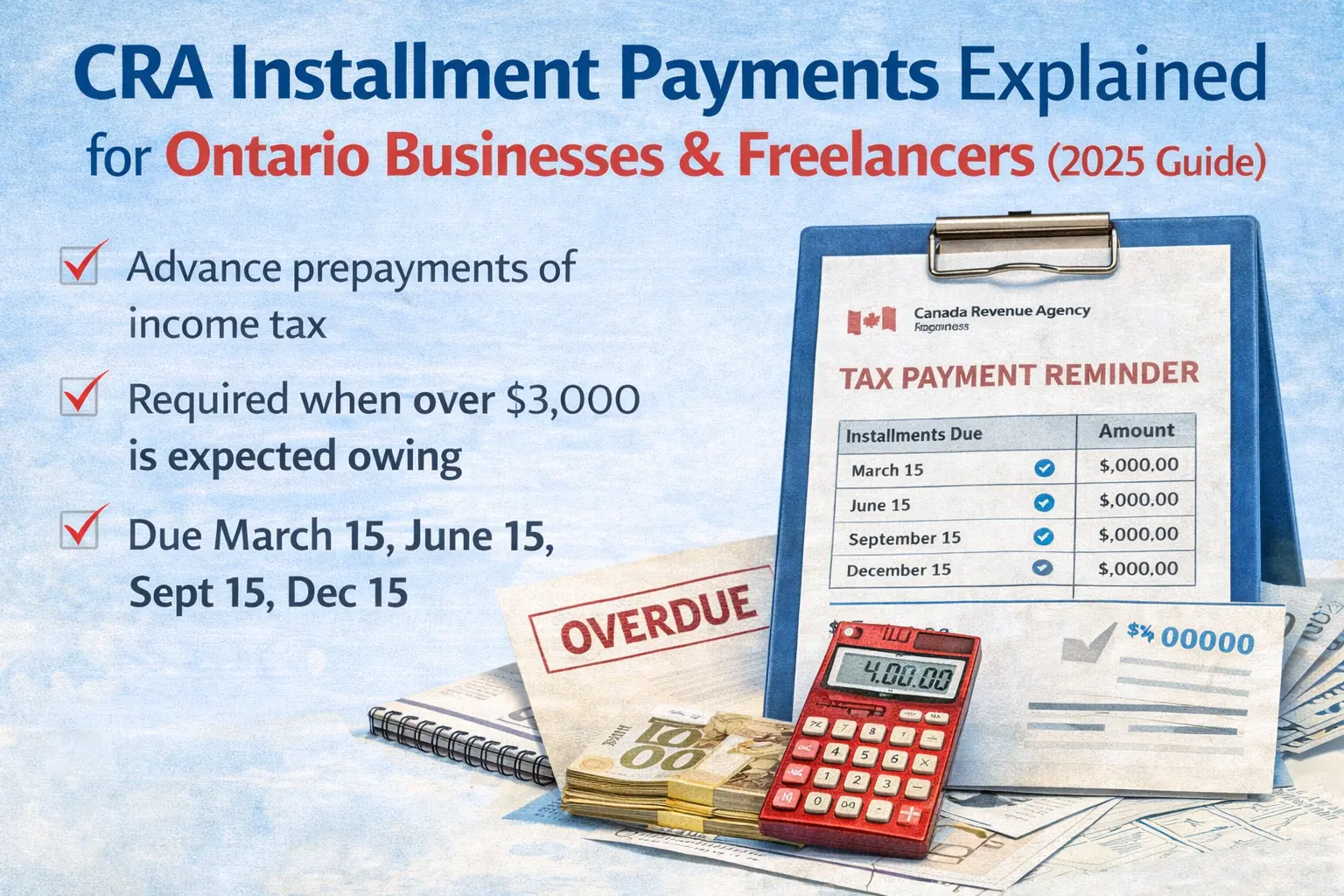
Many Ontario business owners and freelancers are surprised to receive a CRA installment reminder—often after filing a strong year. CRA installment payments are one of the most common areas of confusion and penalties for taxpayers in Ontario, Canada.
This guide explains what CRA installments are, who must pay them, how they’re calculated, and how to manage them properly in 2025 to avoid interest and penalties.
What Are CRA Installment Payments?
CRA installment payments are prepayments of income tax required when a taxpayer is expected to owe a significant balance at year-end. Instead of paying one large amount in April, CRA requires taxes to be paid throughout the year.
Installments apply to:
Who Must Pay CRA Installments in Ontario?
You are generally required to pay installments if:
Individuals & Freelancers
Corporations
CRA Installment Due Dates (Ontario – 2025)
Individuals & Freelancers
Installments are due quarterly:
Corporations
Installments are due monthly, usually starting one month after year-end.
⚠️ Missing installment deadlines results in interest and possible penalties, even if you file your return on time.
How CRA Calculates Installments
CRA offers three installment methods:
1. No-Calculation Option (CRA’s Method)
2. Prior-Year Option
3. Current-Year Option
📌 CPA Tip:
Most Ontario freelancers and businesses benefit from custom installment planning, rather than blindly following CRA reminders.
Common CRA Installment Mistakes in Ontario
These mistakes frequently lead to CRA interest assessments.
How to Reduce or Manage CRA Installments
1. Adjust Installments Based on Income Changes
If your income has dropped, you may legally reduce installment payments—with proper calculation.
2. Use Bookkeeping Software (QuickBooks Online)
Accurate, up-to-date bookkeeping allows:
3. Work With a CPA
A CPA can:
Professional guidance often saves more than it costs.
CRA Installments and Audits: The Hidden Risk
Incorrect or inconsistent installment payments can:
CRA often compares installment payments to reported income patterns.
Frequently Asked Questions (FAQs)
What happens if I don’t pay CRA installments?
CRA will charge non-deductible interest and may apply penalties if installments are significantly underpaid.
Can I reduce my CRA installment payments?
Yes, if your income is lower—but calculations must be accurate to avoid penalties.
Are CRA installments mandatory?
Yes, if you meet the thresholds. Ignoring them does not remove the obligation.
Do Ontario freelancers have to pay installments?
Yes, if they owe more than $3,000 in tax for the year.
Can a CPA deal with CRA installment issues?
Yes. A CPA can recalculate, negotiate, and manage installment compliance.