

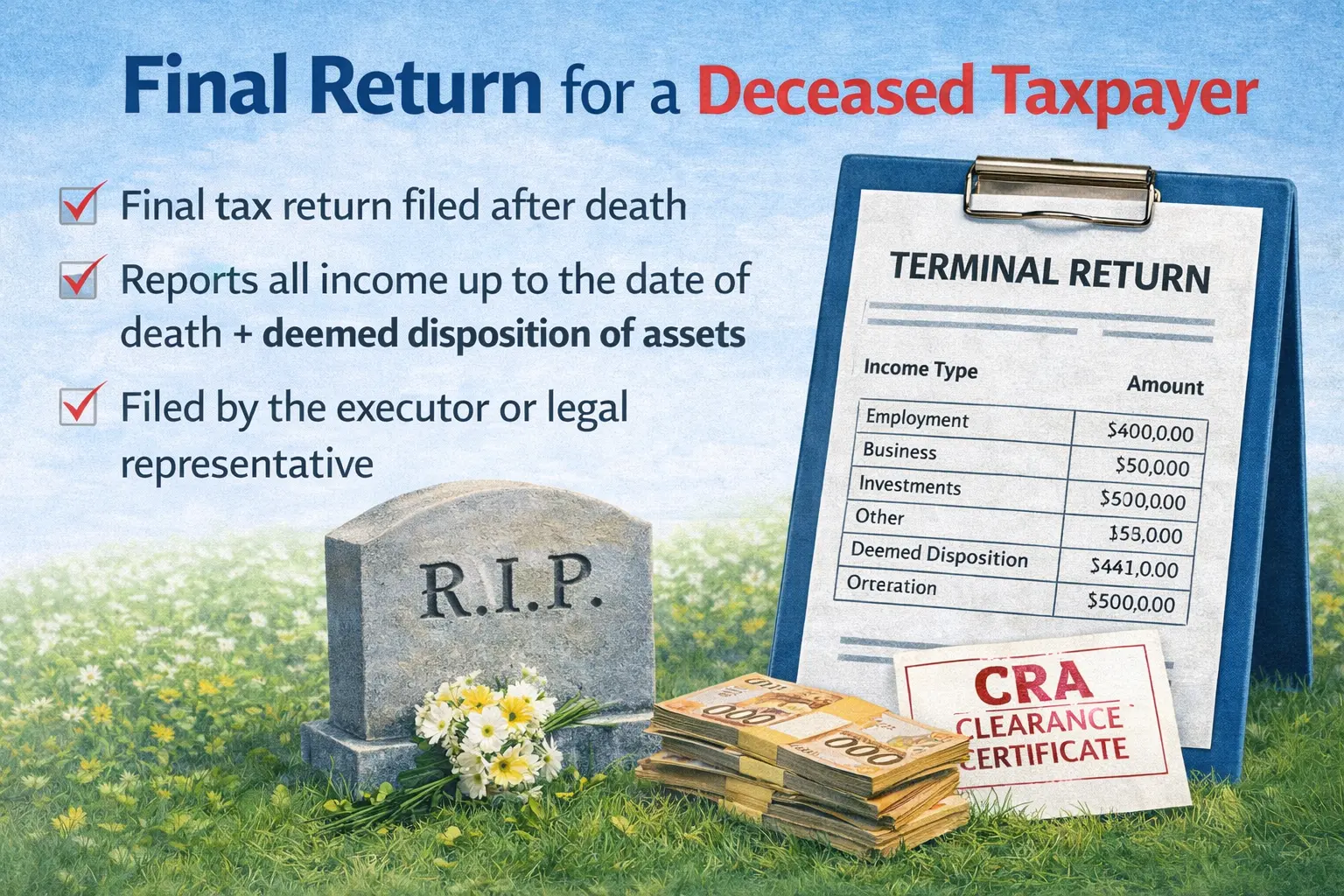
The death of a taxpayer is an emotionally difficult time, and unfortunately, it also creates important tax filing obligations. In Ontario and across Canada, a deceased individual’s tax affairs do not end at death. Instead, the Canada Revenue Agency (CRA) requires the filing of a final tax return, commonly known as a Terminal Return.
This guide explains what a terminal tax return is, who must file it, what income must be reported, key deadlines, and tax planning opportunities available to estates and surviving families in Ontario.
What Is a Terminal Tax Return?
A terminal tax return is the final personal income tax return filed for a deceased taxpayer. It reports all income earned from January 1 up to the date of death, along with certain death-triggered income inclusions that would not arise during life.
The purpose of the terminal return is to:
Who Is Responsible for Filing the Terminal Return?
The responsibility falls on the legal representative, which may include:
The legal representative must:
⚠️ Important:
Any outstanding CRA balances must be paid before assets are distributed to beneficiaries.
Income Reported on the Terminal Return
The terminal return includes:
This income is reported from January 1 to the date of death.
Deemed Disposition at Death (Major Tax Impact)
Under Canadian tax law, a taxpayer is deemed to have disposed of all capital property immediately before death at fair market value.
This may trigger:
This deemed disposition can result in significant tax liability on the terminal return.
Spousal Rollover – Important Tax Relief (ITA 70(6))
When assets are transferred to a surviving spouse or common-law partner, they generally qualify for an automatic tax-deferred rollover under Income Tax Act section 70(6).
Key Benefits:
Example:
John purchased an investment property for $500,000.
At death, the property’s value was $900,000.
Scenario A – Transfer to spouse (Sarah):
Scenario B – Transfer to non-spouse beneficiary:
Filing Deadlines for the Terminal Return (Canada & Ontario)
Date of Death
Filing Deadline
January 1 – October 31
April 30 of the following year
November 1 – December 31
6 months after date of death
Missing deadlines can result in interest and penalties, payable by the estate.
Why Filing the Terminal Return Is Critical
Before beneficiaries can receive assets, the estate must:
Without this certificate, legal representatives may become personally liable for unpaid taxes.
Rights or Things Return (Additional Tax Planning Opportunity)
Certain income items may be considered “rights or things”, such as:
These can be:
Benefits of a Separate Return:
Special Tax Rules in the Year of Death
Credits (Claimed in Full)
No proration required.
Capital Losses
Unused capital losses in the year of death can:
Charitable Donations
Medical Expenses
Estate Planning & Tax Tips for Ontario Families
Frequently Asked Questions (FAQs)
What is a terminal tax return in Canada?
A terminal return is the final personal tax return filed after a taxpayer’s death, reporting income up to the date of death and certain deemed dispositions.
Who files the final tax return after death?
The executor or legal representative of the estate is responsible for filing the terminal return.
Does CRA tax assets at death?
Yes. CRA applies a deemed disposition at fair market value, which can trigger capital gains unless a spousal rollover applies.
Is a clearance certificate required?
Yes. A CRA clearance certificate confirms all taxes are paid before assets are distributed.
Can tax be reduced on death?
Yes. Through spousal rollovers, capital loss utilization, charitable donations, and rights-or-things planning.